The Challenge
Water Scarcity Demands Proven Solutions, Not Hope
Water agencies and agricultural operations across the Western United States face an unprecedented challenge: demand exceeds supply, and traditional solutions can’t close the gap fast enough. The Colorado River Basin serves 40 million people but faces mandated allocation cuts of 20-40% by 2030. Conservation is essential but has limits. Desalination costs $2,000+ per acre-foot. New reservoirs take decades to permit and build.
Traditional cloud seeding has been used for decades, but it lacks statistical validation—you seed clouds and hope for results without measurable proof. Water agencies facing billion-dollar budget decisions and communities confronting existential water shortages need more than hope. They need technology that delivers measurable, documented enhancement.
20%+ SWE Enhancement During Historic Drought
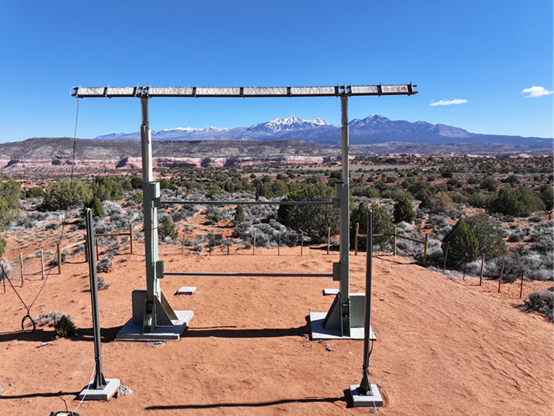
- More than 20% Snow-Water Equivalent (SWE) documented Winter 2025-26
- First-ever statistically significant SWE enhancement using ionization
- Achieved during one of driest winters on record in Western U.S.
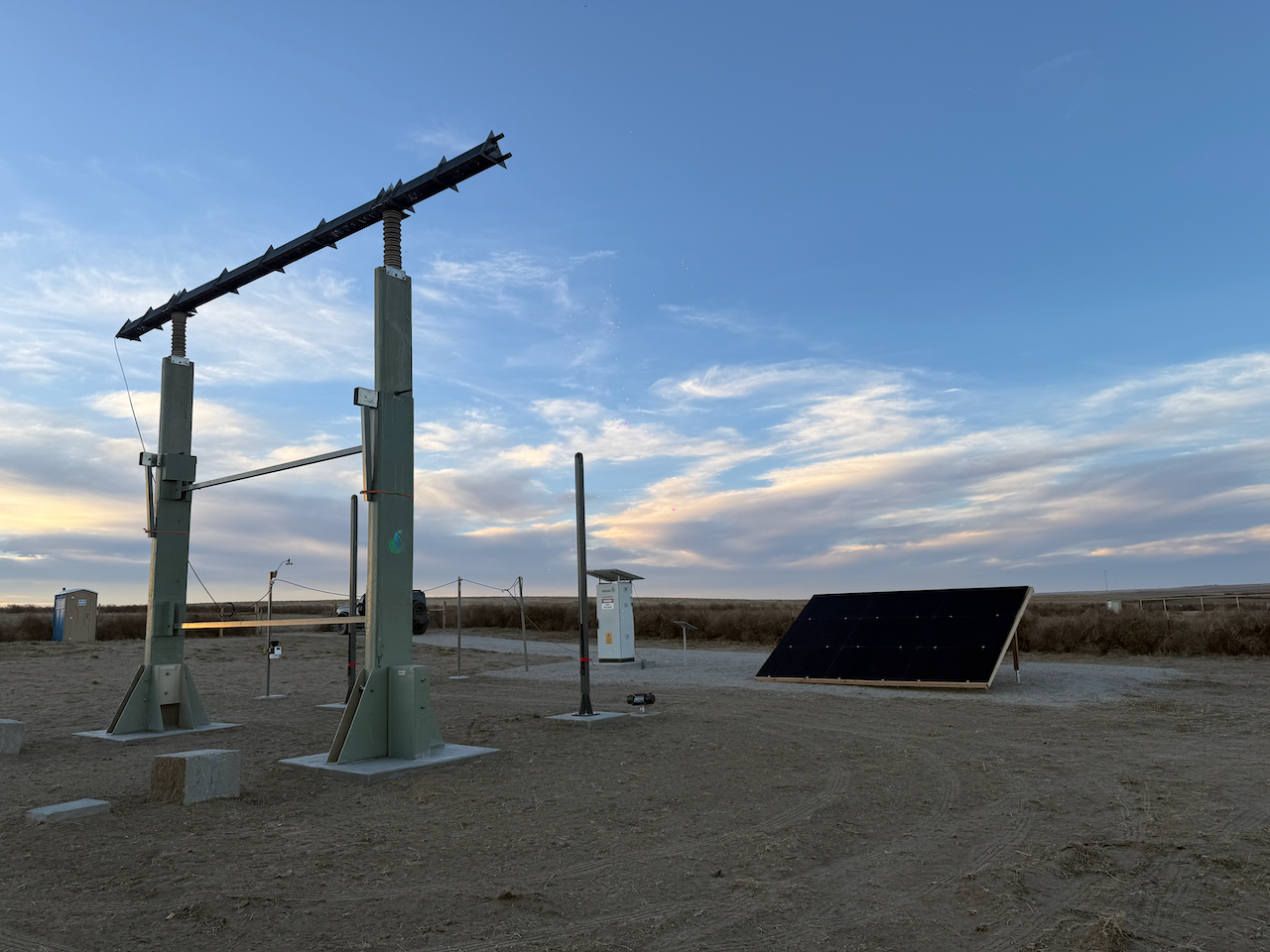
- Autonomous operation on solar power throughout deployment
- Serving San Juan County Water Conservancy District
“This is one of the driest years we’ve seen in multiple years. If there was ever a test for whether this technology works, this is it. And the WETA system is making a difference.”
Radar-Documented Precipitation Enhancement
- Precipitation intensification documented via NOAA weather radar November 2025
- HySPLIT ion plume modeling confirmed causal mechanism
- System deployed and operational within 6 months
- Serving agricultural water needs in Colorado River Basin
- Demonstrates technology effectiveness across diverse conditions
Like Cloudseeding. Only Better.
Traditional cloud seeding has served the Western U.S. for decades. Utah alone invests $16M annually in aircraft-based silver iodide programs. Ionization enhancement doesn’t replace cloudseeding, it complements and extends it, covering marginal conditions where traditional methods can’t effectively operate. In a water-stressed West where every storm counts, that coverage gap matters.
| Category | Cloud Seeding | WETA Ionization |
|---|---|---|
| Chemical Inputs | Silver Iodide | None |
| Aircraft Required | Often | Never |
| Temperature Range | Cold Clouds | Warm + Cold |
| Power Source | Grid/Fuel | Solar |
| Operational Life | Annual | Up to 15 Years |
| Coverage | Variable | Up tp 230k Acres |
RAIN IONIZATION CLOUDSEEDING:
Proven, Reliable Technology with Demonstrated Results
- 1930s | Bergeron- Findeisen theorize around supercooled water droplets
- 1931 | Generator introduces ionization principles
- 1946 | Dr. Vonnegut discovers effectiveness of silver iodide at GE Lab
- 1953 | Dr. Vonnegut suggests influence of electricity, winds on storms
- 1964 | Soviet scientists run successful supercooled fog dissipation experiments
- 1990s | MIT’S Atmospheric Lab conducts field trials in weather modification
- 2017 | Cloud condensation nuclei acknowledged as research principle 2018 | First statistically significant results in 3rd party trials facilitated in part by Scott Morris in Oman1
- 2020 | Local Oman news reports 9% rainfall increase1 2021 | Oman news reports 18% rain increase over a 3rd party, 5-yr trial period from 2013-20181
- 2022 | Leading antenna physicist, Dr. Ted Anderson, builds roadmap for significant antenna improvement2
- 2025 | Rain Enhancement Technologies Holdco, Inc. starts public trading on the Nasdaq: RAIN
- 2025 | First U.S. installation launched in Weld County, Colorado
- 2025 | Second U.S. installation secured in La Sal Mountains, Utah
- 2026 | 20% snowpack enhancement documented in Utah during historic winter drought conditions
Source: MDPI, ACS Org, Nature, Public websites, Plasma patents belonging to RET Senior Technical Advisor, Dr. Ted Anderson
1Trials not performed by RET 2RET has an exclusive perpetual license to the plasma patents
“The model-based & double robust methods both show enhancement with highly significant results.”